
New Booms, Old Lessons

The modern AI economy effectively began in 2022, when researchers learned how to combine large-scale computing with human feedback models. This breakthrough transformed raw language models into useful, interactive systems and unlocked the technologies behind today’s AI platforms. It also triggered an unexpected side effect: a nationwide wave of data-center development. Running this new class of models requires enormous amounts of hardware, real estate, and electricity—costs that many towns across America are only now confronting as datacenter proposals arrive at their doorsteps.
Economists now estimate that AI-related capital investment accounted for roughly one-third to one-half of total U.S. GDP growth in 2025, a remarkable share for a technology that is barely three years old. This investment cycle has helped create new categories of wealth and lifted equity markets to record highs. For years, gains were concentrated in mega-cap technology firms, but more recently, broader swaths of the market—particularly small-cap stocks—have strengthened, suggesting AI’s benefits are beginning to diffuse through the broader economy rather than remain isolated in one sector.
The scale of private investment behind this boom is enormous. Private lenders, venture funds, and private equity firms have spent years building pipelines of AI-related deals, financing everything from semiconductor manufacturing to frontier-model development to edge inference software. Many of these deals are innovative and complex—sometimes making AI companies simultaneously the investment, customer, and commercial partner of the same financial sponsor. While this creativity fuels rapid growth, it also introduces systemic chokepoints: if one link in the chain fails, the damage can cascade through the entire ecosystem.
History offers plenty of warnings. The United States has lived through multiple periods of explosive infrastructure investment—canals, railroads, the telegraph, electrification, nuclear power, fiber optics, and the early internet. Each created lasting value, but each also produced overbuilding, speculation, and financial panic. With AI, critics worry the pattern may be repeating. Markets have grown concentrated and expensive, and in recent months, investors have turned more cautious. Stock indexes have pulled back from their highs, and credit spreads in bond markets have widened, signaling rising concern about risk.
“The United States has lived through multiple periods of explosive infrastructure investment—canals, railroads, the telegraph, electrification, nuclear power, fiber optics, and the early internet. Each created lasting value, but each also produced overbuilding, speculation, and financial panic.”
At the same time, AI companies face intense global competition, extraordinary cash-burning rates, and a private-equity market that may be stretching leverage too far. Investors expect returns on the capital they provide, and each of these conditions threatens to lower future profitability. If growth slows or financing tightens, today’s AI buildout—like the great booms of previous centuries— could reveal pockets of overinvestment.
The AI revolution is real, but so are the financial cycles that accompany it. The challenge for investors now is to benefit from the long-term transformation without repeating the mistakes that often come with revolutionary new technologies.
Tariffs
One of the major outstanding uncertainties around tariffs is the pending US Supreme Court decision on the legality of President Trump’s tariffs. This represents a fundamental constitutional question: can the president unilaterally levy tariffs, or does that authority rest with Congress? Several major US companies have filed lawsuits seeking refunds in anticipation of a ruling against the tariffs—a decision that could force the administration to repay billions of dollars in collected duties.
Amid this uncertainty, the administration has been actively negotiating trade deals. Our Treasury Secretary confirmed that China is “on track to keep every part” of the trade agreement struck last month, with President Trump stating that China agreed to increase both the speed and size of agricultural purchases. Targeted trade relief measures have also been put in place across several countries, including South Korea, the UK, and Brazil.
The administration has also floated the possibility of issuing $2,000 “tariff dividend” checks to middle and lower-income Americans and the concept of reducing or eliminating personal income tax entirely, all funded by tariff revenue. Both the practicality and legality of these strategies have been questioned by lawmakers across the political spectrum.
We need to carefully watch how the trade landscape evolves—the Supreme Court decision looms large, consumer affordability concerns are impacting the political environment, and the push to reduce food prices through selective tariff relief suggests the administration may have a growing concern about inflation. These global trade implications will continue to be top of mind coming into the new year.
Inflation & Jobs
President Trump ramped up his affordability messaging, telling Americans that inflation was “almost at the sweet spot” and claiming we have “normalized it” around his stated 1% target. Yet, conversely, Consumer Price Index data showed inflation stubbornly holds at an annual rate of 3%—well above both Trump’s 1% claim and the Federal Reserve’s 2% target.
“Consumer Price Index data showed inflation stubbornly holds at an annual rate of 3%—well above both Trump’s 1% claim and the Federal Reserve’s 2% target.”
On the inflation front, the Producer Price Index surged 0.3% in September, driven primarily by a 3.5% jump in energy costs. This suggested that producers were passing through some tariff costs, and that further inflationary pressure may still be ahead as businesses continue facing higher input prices. The Fed’s preferred inflation measure, the Personal Consumption Expenditures index, provided a somewhat encouraging result, showing only a slight uptick to 2.8% annually.
The September jobs report was also delayed by the government shutdown and was just recently released, revealing a labor market at an inflection point. The economy added 119,000 jobs, which was more than double the expectation. However, beneath the headline number, warning signs emerged as unemployment crept up to 4.4%, the highest level since October 2021. This data left the Fed in a challenging position—balancing persistent inflation concerns against mounting evidence of labor market deterioration.
Finally, retail sales data for September was delayed and recently released. It showed that American consumers pulled back. Headline retail sales climbed just 0.2%, missing the 0.4% expectation and decelerating from August’s 0.6% gain.
Federal Reserve
The Fed Chair succession process heated up considerably as of late. Fed Governor Chris Waller confirmed his recent meeting with the Treasury Secretary, stating, “I think they are looking for someone who has merit, experience, and knows what they are doing in the job, and I think I fit that”. President Trump began final interviews with a variety of candidates and made it clear that his test for the next Fed chair is “whether they want to lower rates immediately”. Powell’s term ends in May, and an announcement of the next Fed chair is expected early next year.
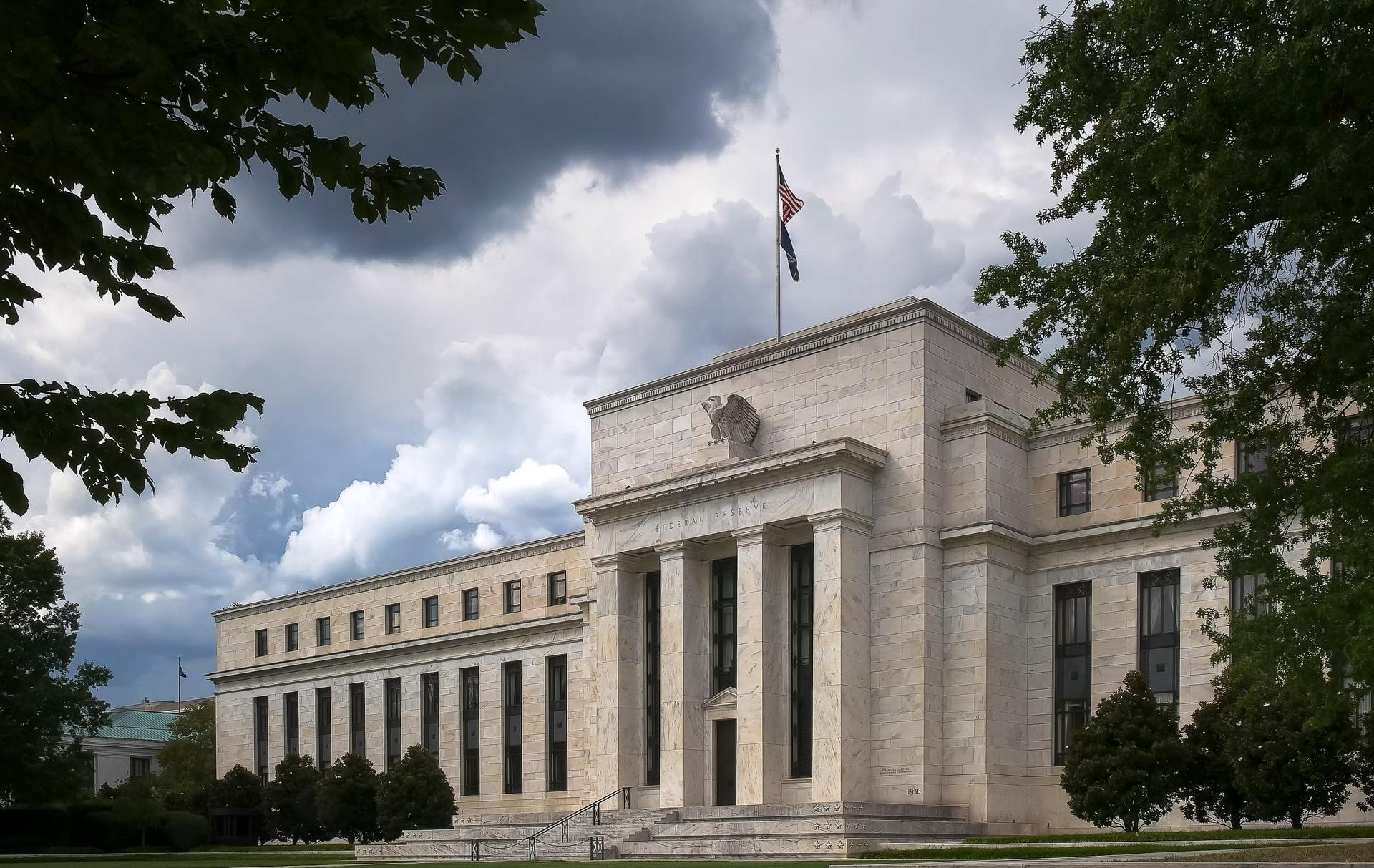
The final Fed meeting of the year delivered a divided decision that underscores the challenging path ahead for our country’s monetary policy. The central bank cut rates by a quarter point for the third time this year, bringing the benchmark rate to a range of 3.5% to 3.75%. The decision drew dissents in opposing directions—marking the first time since 2019 that three Fed officials voted against a policy action.
“The decision drew dissents in opposing directions—marking the first time since 2019 that three Fed officials voted against a policy action.”
The Fed revised its expected GDP growth higher to 2.3% for 2026, versus 1.8% previously, while inflation is expected to fall to 2.5% next year from the current 3% level. The Fed expects unemployment to tick down to 4.4%. As we navigate this environment, we’re focused on the interplay between resilient economic growth, stubborn inflation, leadership transition risks at the Fed, and the persistent disconnect between short-term policy rates and long-term market rates.

Stocks
There continues to be a lot of attention surrounding AI’s impact on the investing landscape. Nvidia’s latest earnings underscored just how powerful demand for AI infrastructure has become, with revenue and guidance far exceeding expectations and data-center sales booming. While geopolitical tensions—particularly in China—created some drag, Nvidia is successfully redirecting growth toward new global markets. More broadly, the entire AI ecosystem is entering a capital-intensive phase: tech giants and utilities are borrowing trillions to build the data-center capacity needed for AI, pushing corporate debt costs higher and raising questions about long-term returns. For investors, the opportunity in AI is enormous, but so are the risks—especially the uncertainty around profitability timelines and the growing concentration of financial exposure in a few major players.
Overall, the equity markets performed well in November. In the US markets, small caps bounced and outperformed large caps. But on a year-to-date basis, large caps display strong double-digit returns, whereas small caps are generally down over that time period. This illustrates the toll interest rate markets have taken on small caps.
Internationally, stocks have had a blockbuster year with returns around 30% across most broad foreign equity markets. Throughout this year, the global trade landscape has radically changed the dynamics of global stock market returns. Generally speaking, the broad all-cap foreign equity market returns are in close parity to those of similar US markets, over the trailing three year period.
Bonds
There has been a persistent rise in long-term Treasury yields despite the Fed’s easing campaign. Since the Fed began cutting rates in September, peeling back a total of 1.5 percentage points, we’ve seen the 30-year Treasury yield hover near 4.8% and the 10-year around 4.2%—both rising over the past month and surpassing where they stood at the start of the easing cycle.
Bond markets are seemingly reacting to a global realignment on trade and uncertain expectations around American governance. Higher yields reflect investor demand for greater compensation given higher deficits and mounting policy risks, and potentially some market disagreement with continued Fed cuts while inflation remains elevated. A more optimistic interpretation could be that this divergence in short and long-term yields is signaling confidence that an economic slowdown will be averted.
Most bond sectors posted modest, nominal gains in November. Overall, most bond sectors stand to post respectable returns for the year, except for the longer-term segment of the market. Most long-term bonds have struggled to post any meaningful returns for the year, sitting at near-flat total return levels. The bond market is starting to look a bit better over 3-year averages as well, with the exception of long-term bonds.
© Advisory Alpha. Registration with the SEC or a state does not constitute an endorsement of the firm by regulators, nor does it indicate that the adviser has attained a particular level of skill or ability. This content is for informational purposes only and does not intend to make an offer or solicitation for the sale or purchase of any securities. Investing involves risk, including the potential loss of principal. No investment strategy, such as asset allocation or diversification, can guarantee a profit or protect against loss in periods of declining values. All investment strategies involve risk and have the potential for profit or loss. Changes in investment strategies, contributions or withdrawals, and economic conditions may materially affect the performance of your portfolio. There are no assurances that a portfolio will match or outperform any particular benchmark. Investors should carefully consider the investment objectives, risks, fees, and expenses before investing. Any financial services firms referenced in this material do not provide tax or legal advice. Please consult with your tax or legal professional regarding specific issues prior to making a tax or legal decision. The performance information presented in the asset category section of this report is based on equal-weighted averages of the following Morningstar Categories: US Stocks (US Fund Large Blend, US Fund Mid-Cap Blend, US Fund Small-Blend), Foreign Stocks (US Fund Foreign Large Blend, US Fund Foreign Small/Mid Blend, US Fund Diversified Emerging Mkts), US Bonds (US Fund Intermediate Government, US Fund Inflation-Protected Bond, US Fund Corporate Bond, US Fund High Yield Bond, US Fund Bank Loan), Foreign Bonds (US Fund World Bond, US Fund Emerging Markets Bond), Hard Assets (US Fund Commodities Precious Metals, US Fund Commodities Energy, US Fund Global Real Estate, US Fund Real Estate), Hybrid Assets (US Fund Convertibles, US Fund Preferred Stock). © 2025 Morningstar. All Rights Reserved. The information contained herein: (1) is proprietary to Morningstar and/or its content providers; (2) may not be copied or distributed; and (3) is not warranted to be accurate, complete, or timely. Neither Morningstar nor its content providers is responsible for any damages or losses arising from any use of this information. Past performance is no guarantee of future results. Morningstar category data is provided for illustrative purposes only to demonstrate a hypothetical investment vehicle represented by a group of similar investments. Morningstar category data is an aggregation across actual funds contained in the category, but it is not possible to directly invest in a category. Index returns are provided for illustrative purposes only to demonstrate a hypothetical investment vehicle using broad-based indices of securities. Unmanaged indexes are not available for direct investment. All data shown does not include internal fund expenses, trading costs, financial advisor fees, commissions, or taxes. This information is not intended to predict the performance of any specific investment or security. Past performance is no guarantee of future results. Bureau of Labor Statistics. Unemployment Rate, Total Nonfarm Employment, Labor Force Participation, Consumer Price Index, Producers Price Index. www.bls.gov. United States, Department of Commerce, Bureau of Economic Analysis. Personal Consumption Expenditures, Gross Domestic Product, Consumer Spending, Personal Income, and Outlays. www.bea.gov. Federal Reserve. Fed Funds Rate, Fed Funds Target Range, Minutes of the Federal Open Market Committee, Board of the Federal Reserve System Calendar. www.federalreserve.gov. Trump, Donald. @realDonaldTrump. Truth Social.